
What Can One Zoo’s Experience Teach the Broader Zoo Community?
For zoo facilities teams, sustainability isn’t a single initiative.
It is reflected in thousands of operational decisions made every day: how waste is collected, how staff resources are used, how public spaces are maintained, how litter and pests are controlled and how infrastructure supports both guests and animal environments.
At Denver Zoo, those considerations have helped shape a multi-year partnership with Bigbelly.
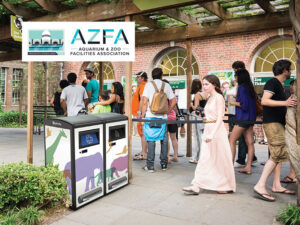
On Oct. 12 at AZFA 2026, Joshua Hernandez, Director of Campus Services at Denver Zoo, will share what the Zoo has learned as it has implemented and expanded its Bigbelly program.
Ahead of that conversation, here are several lessons emerging from Denver’s experience.
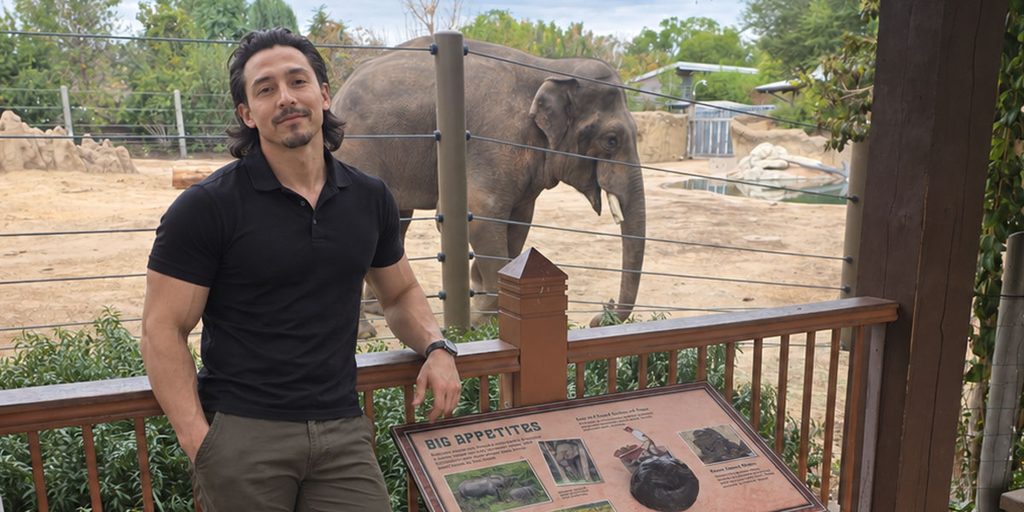
Joshua Hernandez, Director of Campus Services at Denver Zoo
1. Infrastructure Should Work for the People Servicing It
A waste station may be guest-facing, but the people interacting with it most consistently are often the employees responsible for servicing it.
Denver Zoo uses a lift-style Bigbelly configuration that integrates with its Grounds team’s existing collection equipment.
Joshua says that has reduced manual handling and made collections easier for staff. Less manual handling can also help lessen the possibility of strain or injury during collection.
It’s an important reminder: operational infrastructure should be evaluated not only by how it looks to guests, but by how effectively it works for employees.
2. Fully Enclosed Waste Matters in an Animal Environment
Waste containment takes on a different significance in a zoo.
Food and waste can attract squirrels, birds, insects and other unwanted pests, while litter can migrate into exhibits, habitats and surrounding natural areas.
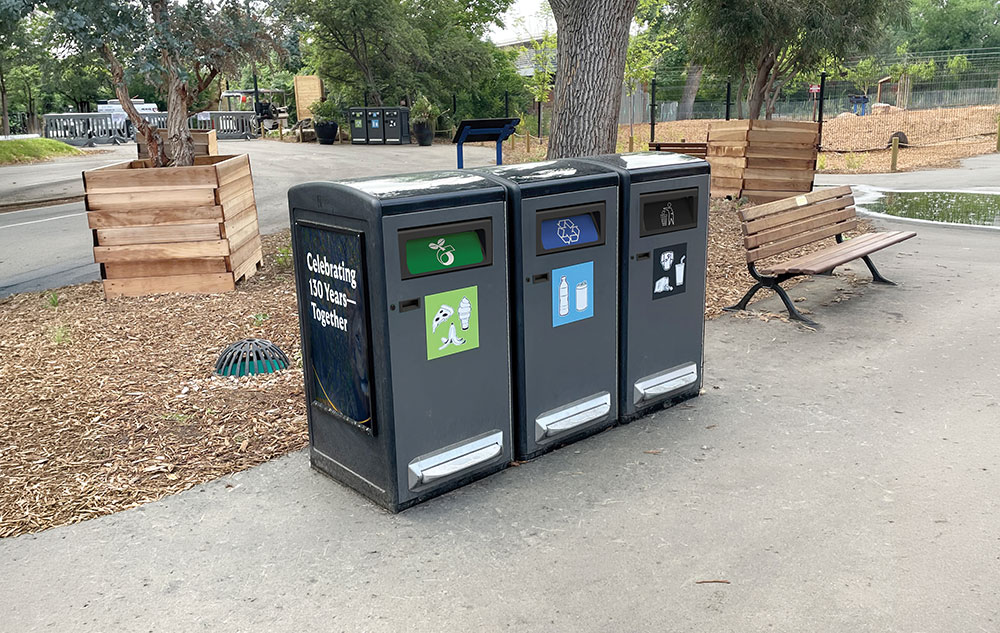
Denver Zoo’s fully enclosed Bigbelly stations help keep waste contained, reducing opportunities for pests to access it and helping prevent windblown and pest-strewn litter.
That one operational choice can support multiple priorities at once: cleaner public spaces, a better guest experience and an environment designed with animal wellness in mind.
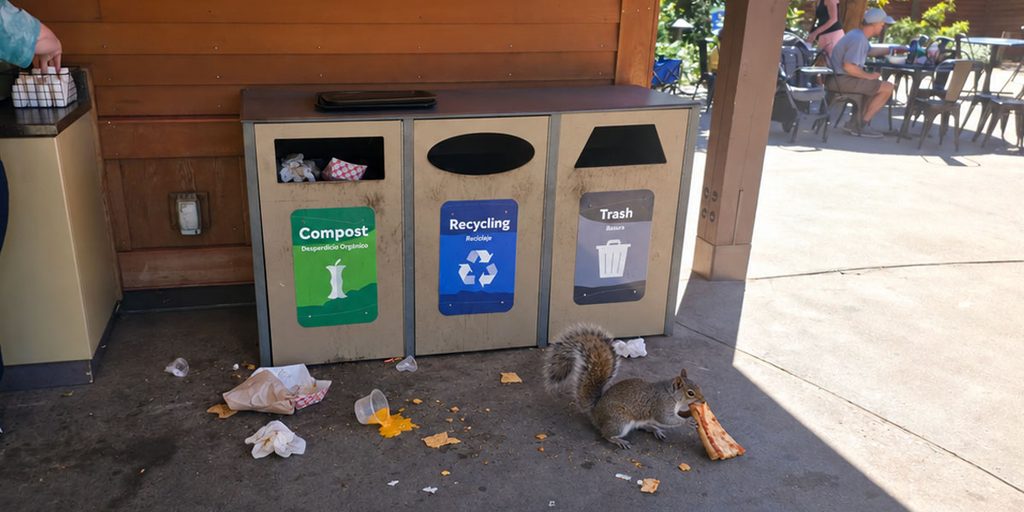
Open receptacles allow for easy pest access and windblown litter.
3. Sustainability Extends Beyond What Guests See
Denver Zoo provides trash and recycling for guests, but its waste-management strategy doesn’t end there.
Behind the scenes, the Zoo also composts animal waste and food waste generated by its restaurants. Its approach considers the broader waste stream—from guest-facing disposal to the way different materials are collected and managed after the fact.
That is particularly relevant for zoo and aquarium organizations, where conservation missions increasingly intersect with everyday operational decisions.
4. One Solution Doesn’t Have to Fit Every Part of a Zoo
Entrances, pathways, food courts, exhibits, event spaces and high-traffic gathering areas don’t generate waste at identical rates.
Denver Zoo’s program has evolved with that reality in mind.
As the Zoo moves forward, its team is considering whether solar-powered compacting Bigbelly stations could provide additional capacity in some of its busiest areas.
The lesson isn’t necessarily that every location needs more technology. It’s that infrastructure can be matched to the operational needs of each environment.
5. Transformation Doesn’t Need to Happen All at Once
Perhaps one of Denver Zoo’s most useful lessons for other facilities is its phased approach.
The Zoo has completed phase two of a three-phase program and plans to complete its remaining Bigbelly installations as part of phase three in 2027.
That approach allows an organization to start with priority areas, learn from implementation, adapt to different environments and align future investments with budgets and operational priorities.
From One Zoo to Another
The zoo community is collaborative by nature.
Joshua has already spoken with peers at other zoos about Denver’s experience, sharing what has worked in a real-world environment.
On Oct. 12, that conversation expands at AZFA.
Attendees will have an opportunity to hear directly from Denver Zoo about the decisions behind its program, the lessons learned through implementation and where the partnership is heading next.
Because some of the most useful ideas in our industry don’t begin with a product.
They begin with one organization sharing with another: Here’s what we’ve tried. Here’s what we’ve learned. And here’s what’s working.
Continue the Conversation at AZFA
Join Joshua Hernandez and Bigbelly on Oct. 12 at AZFA 2026 in Cincinnati.
Then explore the complete Denver Zoo story to learn more about its approach to cleaner spaces, staff operations, guest experience, animal wellness and sustainability.
Learn MoreSustainability in Every Habitat.
Built to Last. Built for Life. Performance That Endures.
All Together Better.