
A Customer Perspective Takes the Stage at AZFA
What does smarter waste and recycling infrastructure look like in a working zoo environment?
At the upcoming AZFA Annual Conference in Cincinnati, attendees will have an opportunity to hear directly from someone putting that strategy into practice.
On Oct. 12, Joshua Hernandez, Director of Campus Services at Denver Zoo, will join Bigbelly to share Denver Zoo’s experience implementing and expanding Bigbelly throughout its campus.
Rather than talking about what smarter zoo infrastructure could accomplish, Joshua will offer a firsthand look at what Denver Zoo has learned through a multi-year implementation.
A Program Built Over Time
Denver Zoo and Bigbelly have worked together over several years to evolve waste and recycling infrastructure throughout the Zoo.
What began as an infrastructure improvement has developed into a phased program focused on creating cleaner public spaces, supporting staff, reducing pest access to waste, advancing sustainability and enhancing the guest experience. Denver Zoo has now completed phase two of its three-phase rollout, with its final phase planned for 2027.
Joshua describes the experience this way:
“We’ve had a really positive experience with Bigbelly. The bins work well for our team, they help us maintain cleaner and more attractive spaces, and we’re continuing to build on the program as we move into our next phase.”
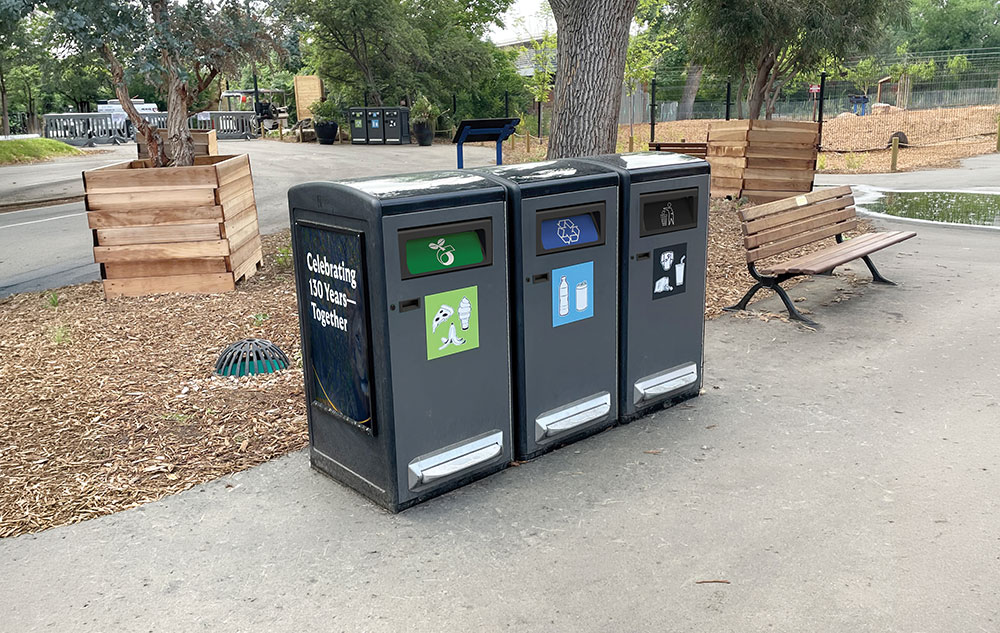
Better for Guests. Better for Staff. Better for the Zoo.
At AZFA, Joshua will share lessons from the program across several areas that matter to zoo facilities and operations professionals.
For Denver Zoo, fully enclosed waste infrastructure helps keep waste contained while limiting access by squirrels, wasps, birds and other pests. The stations also contribute to cleaner, more attractive public spaces and can be customized to fit more naturally into the Zoo environment.
Behind the scenes, Denver Zoo’s lift-style Bigbelly configuration works with its Grounds team’s existing collection equipment, reducing manual handling and making servicing easier for staff.
And the program continues to evolve.
Denver Zoo is evaluating where different Bigbelly configurations can have the greatest impact, including whether solar-powered compacting stations could provide additional capacity in select high-volume locations.
Sharing What Works Across the Zoo Community
One of the most valuable parts of AZFA is the opportunity for zoo and aquarium professionals to learn directly from one another.
Joshua has already shared Denver Zoo’s experience with peers evaluating Bigbelly for their own facilities, including a colleague at Oregon Zoo.
That same peer-to-peer perspective will be at the center of the Oct. 12 conversation.
Every zoo operates differently. But many face similar questions: How can we keep public spaces cleaner? How can we support staff? How can infrastructure complement the guest environment? How can everyday operations contribute to sustainability and animal wellness?
Denver Zoo’s experience offers one real-world perspective on addressing those questions.
Join Us at AZFA 2026
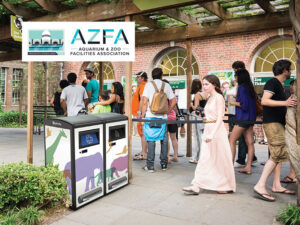
Bigbelly is proud to sponsor the 33rd Annual AZFA Conference, Oct. 11–15 in Cincinnati, hosted by the Cincinnati Zoo & Botanical Garden.
Join us on Oct. 12 to hear directly from Joshua Hernandez about Denver Zoo’s experience, lessons learned and what’s next as the Zoo continues building its Bigbelly program.
Sustainability in Every Habitat.
Built to Last. Built for Life. Performance That Endures.
All Together Better.